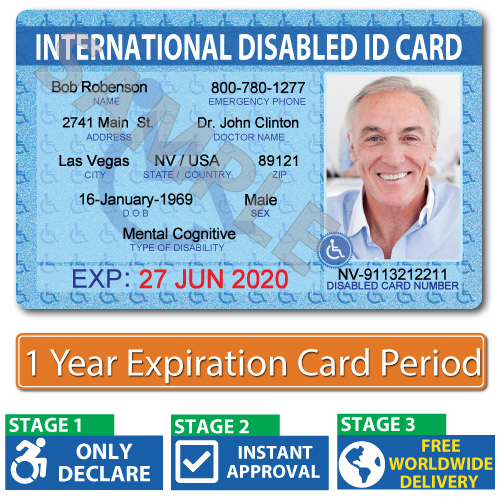
In our society, we have many official documents to verify our status and get special help. A document that shows you have a disability is very important. It’s not just a disabled card, it`s an ID; it’s a way to get more access and be included.
This document can look different, like a parking permit or a national ID for people with disabilities. It can also be a special pass for certain situations, like the Access 2 Entertainment card for extra seating or the IBCCES Accessibility Card for sensory needs. Each one has its own purpose in showing you need help.
The main job of this document is verification. It helps people show they need special help in different places. This simple document can open doors to many benefits and services, making things fairer.
Having this card can save you money on things like entry fees and travel. It also lets you get priority services and use special facilities. It’s a key for access, independence, and inclusion. It helps people move around public places, cultural spots, and transportation systems more easily and with pride.
This article will show you the different kinds of these documents, how to get them, and how to use them. We’ll help you understand how to get the most out of them.
Understanding What a Disabled Card Is
A disabled card is a card that shows a person’s disability status. It helps prove if someone is eligible for certain services or rights. These cards make life easier and more affordable for people with disabilities.
Definition and Purpose
A disabled card, or disability card, is a document that shows a person’s disability. It’s used to get access to services and rights. It’s like an accessibility card that proves a person needs special help.
These cards are official proof. They let people get special benefits like parking spots or discounts. The main goal is to make life easier and more respectful for people with disabilities.
Eligibility Criteria
To get a disabled card, you need to meet certain rules. You must have a long-term disability that affects your daily life. The disability must be permanent.
For example, the Canadian Access 2 Card is for people with permanent disabilities who need a support person. The IBCCES Accessibility Card (IAC) is for a wider range of needs, like autism or mobility issues. Each card has its own rules.
Types of Disabled Cards
Disabled cards can be divided into two main types: government-issued and program-specific.
Government-Issued Cards and Permits: These are official IDs from the state or federal government. They give legal rights, like parking spots.
Program-Specific Cards: These are given by non-profits or private groups for certain reasons. The Access 2 Entertainment Card and the IBCCES Accessibility Card are examples. They let people get free or discounted entry at places like theme parks.
Knowing which card you need depends on what you want, like parking or theme park access.
How to Apply for a Disabled Card
Applying for a disabled card might seem hard, but it’s easy once you know how. This guide will show you the steps, the documents you need, and how to make sure your application goes smoothly. Let’s break it down into simple steps.
Application Process Overview
Getting a disabled card involves a few steps. First, check if you meet your state’s disability criteria. Then, gather and fill out the needed documents. Lastly, send your application to your state’s Department of Motor Vehicles (DMV) or a specific department for other cards.
For certain programs, like Access 2 Entertainment, you need a form and a doctor’s verification. You can apply by mail, fax, or email. It usually takes 4 to 6 weeks to process.
Required Documentation
Getting the right documents is key. Having everything ready saves time and avoids delays.
You’ll need:
Proof of Disability: A signed “Section C” form from a healthcare professional. This can be a doctor, nurse, social worker, or therapist. They must confirm your disability or medical condition.
Proof of Identity and Residency: A government-issued photo ID and a document showing you live in the state (like a utility bill or lease agreement).
Completed Application Form: The form from the agency, filled out correctly.
For Access 2, a Section C verification is required. This must be signed by an approved healthcare professional to show you’re eligible.
Tips for a Successful Application
To make the disability card application process smooth, prepare well.
Start collecting documents early. Ask your doctor or therapist to fill out their part of the form well before you need the card. Don’t wait until the last minute.
Check the professional’s credentials. Make sure the person filling out your medical verification is approved for the program (e.g., doctor, nurse practitioner, social worker, or therapist).
Consider processing time. Don’t wait until your current card expires. If a program like Access 2 takes 4-6 weeks, apply at least two months before you plan to use it. The small fee (e.g., $20 for 3 years) is worth the benefits.
Lastly, make copies of everything you submit. Keep a full copy of your application for your records before sending it. This simple step can save you from having to start over if any documents are lost.
Benefits of Having a Disabled Card
Getting a disabled card is more than just filling out forms. It’s a key to a world of benefits. It unlocks access to important services, financial help, and easier daily life. It’s not just for identification; it’s for real-life improvements.
Access to Services and Supports
A disabled card makes it easier to get the help you need. Places like the International Association of Accessibility (IAC) use these cards to speed up requests. This means quicker access to things like special seating or quiet areas.
These perks can make life easier and less stressful. For example, the IAC helps get you into places faster. This means more time to enjoy with loved ones.
Financial Savings
One big plus is the money you can save. Many places offer discounts or free entry for cardholders and their helpers. The Access 2 card in Canada is a great example, giving free or discounted entry at over 500 spots.
These programs help cover the extra costs of disability. Museums and theaters often give discounts for both the cardholder and their helper. This makes going out more affordable and fun.
Enhanced Mobility Options
One of the most obvious benefits is parking. A disabled card lets you get a disabled parking permit or placard. This means you can park closer to where you need to go.
The card also helps you move around more easily. It’s a recognized ID for asking for help in public. The handicapped card helps you ask for what you need, like under the Americans with Disabilities Act (ADA).
In short, a disabled card offers real benefits. It helps with money, services, and getting around. It’s a powerful tool for living more freely and easily.
Maintaining Your Disabled Card
Managing your disabled person ID is key to keeping your benefits and rights. Stay updated on renewal times and keep your details current.
Renewal Requirements for Your Disabled Person ID
Your disabled entitlement card needs to be renewed from time to time. For instance, the Access 2 card lasts three or five years, based on the application fee. Remember to renew it before it expires to avoid losing access to important services and discounts.
Reporting Changes in Your Circumstances
It’s your duty to inform the issuer of any big changes. This includes moving, a change in your disability, or losing your card. Keeping your information up to date ensures your ID stays valid and useful.
Frequently Asked Questions
Here are answers to some common questions about the disabled person ID.
Is my disabled person ID valid nationwide? Your card is usually good across the country. But, check with the International Association of Cards (IAC) before traveling to partner locations.
What if my card is lost or stolen? Tell the issuer right away if your card is lost or stolen. They’ll help you get a new one and deactivate the old one.
What does the card guarantee? Remember, a disabled entitlement card doesn’t mean you’ll get into everywhere. It’s for asking for reasonable adjustments and as a form of ID. It’s not a guarantee of access to all services or places.